With the high cost of college attendance, it’s imperative that students and their families start saving early. This includes applying for scholarships long before junior or senior year of high school.
Yes, you read that correctly. There are many college scholarships for younger students. The earlier version of this post details the many benefits of apply early to build a solid college fund.
Be Sure Criteria is Met
➡️Carefully read the eligibility requirements before starting an application. ➡️Don’t apply unless minimum requirements are met. ➡️Some scholarships are renewable, while others are one and done. Be sure to understand the details of each scholarship before you apply. ➡️Adjust future monetary needs accordingly.

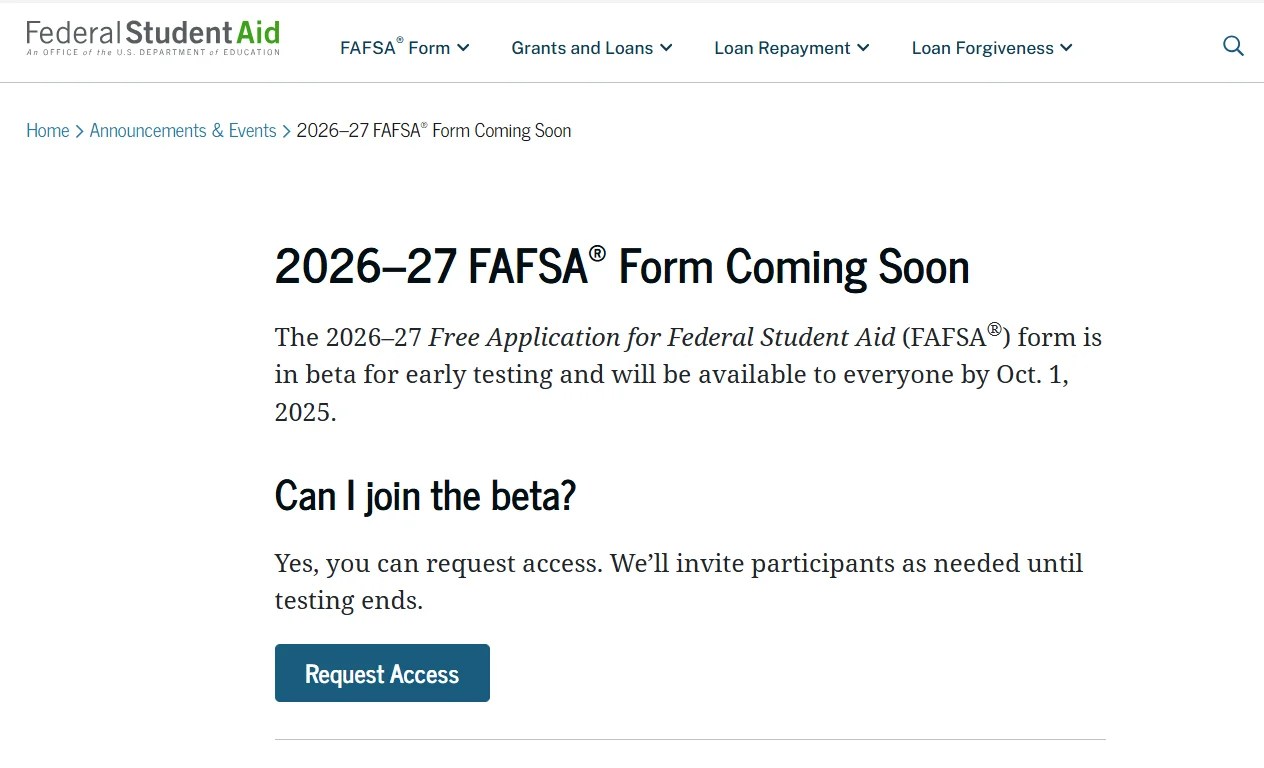
As reported earlier, the Department of Education (ED) was conducting FAFSA 2026-27 beta testing with a selected pool of participants. This is somewhat similar to what happened for the 2025-26 application cycle following the collapse of the system during the 2024-25 launch.
During the last FAFSA application cycle the schedule of testing phases were listed along with the type of participants. With the official launch date two weeks away, details from ED about the number of participants and the preliminary results are far less detailed than the previous cycle.
How This Year Differs
Rather than a multiple phases with an incremental increase in size each time, it appears there’s been one primary testing group of unknown participants. This initial phase is closed.
Information reported by the National Association of Financial Aid Administrators is not encouraging but also not as alarming as the reports from two years ago.
The second phase is open an continues until the end of September. Little information has been found to explain how this second phase will work.
Would You Like to Be a Beta Tester?
Any student can apply to be a beta tester by submitting a request of the Federal Student Aid (FSA) website. Not everyone who applies will be accepted. Details about the selection process are difficult to find.
Students who are granted early access will not need to take further action on October 1, unless there is an issue with the submission.
The passage of the OB3 made significant changes to who is eligible for a Pell Grant and how much these students can receive.
The new law impacts all students, i.e., rising high school seniors and current college students.
Let’s examine the changes that go into effect on July 1, 2026 and then look forward to what might come next.
Note: The FAFSA application that opens on October 1, 2025 is for the 2026-27 school year. The changes are not retroactive and should have no impact on awards for the 2025-26 school year.