The Night Sky 2026 Edition

Unplug – Reconnect to the Night Sky

The Night Sky 2026 Edition

Night sky watching serves as a powerful, low-cost antidote to today’s tech-saturated world, offering profound educational and economic benefits. It forces a shift away from dopamine-driven screens, requiring the development of deep, screen-free observational skills. Instead of relying algorithms, stargazers train their eyes to adapt to darkness, recognize subtle visual patterns, and track slow, real-time celestial changes.

This open-air laboratory is entirely free from subscription models, targeted ads, and expensive hardware upgrades. By trading digital notifications for the quiet focus of the cosmos, sky watching provides a high-value intellectual pursuit that costs absolutely nothing and reconnects us with the natural world.

BONUS

Origin of  Full Moon Names (from Partnership with Native Americans)

The “Blue Moon” is not on the standard list of moon names due to its rarity.


July 2026 

Night Sky July 2026

Click to watch on YouTube.


     (Use the date links to see detailed descriptions.)        

July 14: – Can you spot the Milky Way?

The night of the new moon offers a great opportunity to spot the Milky Way.

July 17: Crescent moon and Venus

July 18:  Southern Delta Aquarids begin

June 2026 

Night Sky June 2026

Overview of events from NASA Jet Propoulsion Laboratory YouTube Channel

There’s plenty to see in the June 2026 night sky, including planetary conjunctions and alignments to the Strawberry moon, summer soltice, and the peak of the Bootid meteor shower.

From National Geographic 

From Space.com

From EarthSky

From Astronomy Magazine

May 2026

May 1 – Full “Flower” moon. This one is a trickster because the peak of the full moon will occur during daylight hours at 1:23 PM EDT. Children can witness the early stages as they leave for school.

May 4 – Moon reaches apogee (farthest from earth’s center).

May 5-6 – Eta Aquarids meteor shower reaches its peak.

May 13-15 – Crescent moon near Saturn and Mars.

May 16 – New moon.

May 31 – Another full moon – this one’s a Blue Moon.

Read More

Thomas Jefferson – In His Own Words

Image History

Thomas Jefferson – In His Own Words

Because the internet is rife with quotes attributed to Thomas Jefferson that often aren’t his words, here you’ll find excerpts from letters by Thomas Jefferson in his own words.

Each quote will link to the full text of Mr. Jefferson’s communication, so you can read it in its entirety and full context.

At a time when people referring to themselves as patriots often invoke the term “founding fathers” along with the Constitution without adequate foundation, it’s important to have objective perspective.

What better way to attain that than via the person’s own words?

Thoughts on Constitutions

The letter expressed thoughts on the Virginia state constitution but it is not unreasonable to conclude that Mr. Jefferson was making a general reference. He also reflects on how the passage of time coupled with experiences impacts one’s understanding and views.

“But I know also, that laws and institutions must go hand in hand with the progress of the human mind. As that becomes more developed, more enlightened, as new discoveries are made, new truths disclosed, and manners and opinions change with the change of circumstances, institutions must advance also, and keep pace with the times. We might as well require a man to wear still the coat which fitted him when a boy, as civilized society to remain ever under the regimen of their barbarous ancestors.”

Letter to Samuel Kercheval/Henry Tompkinson | July 12, 1816

Read More

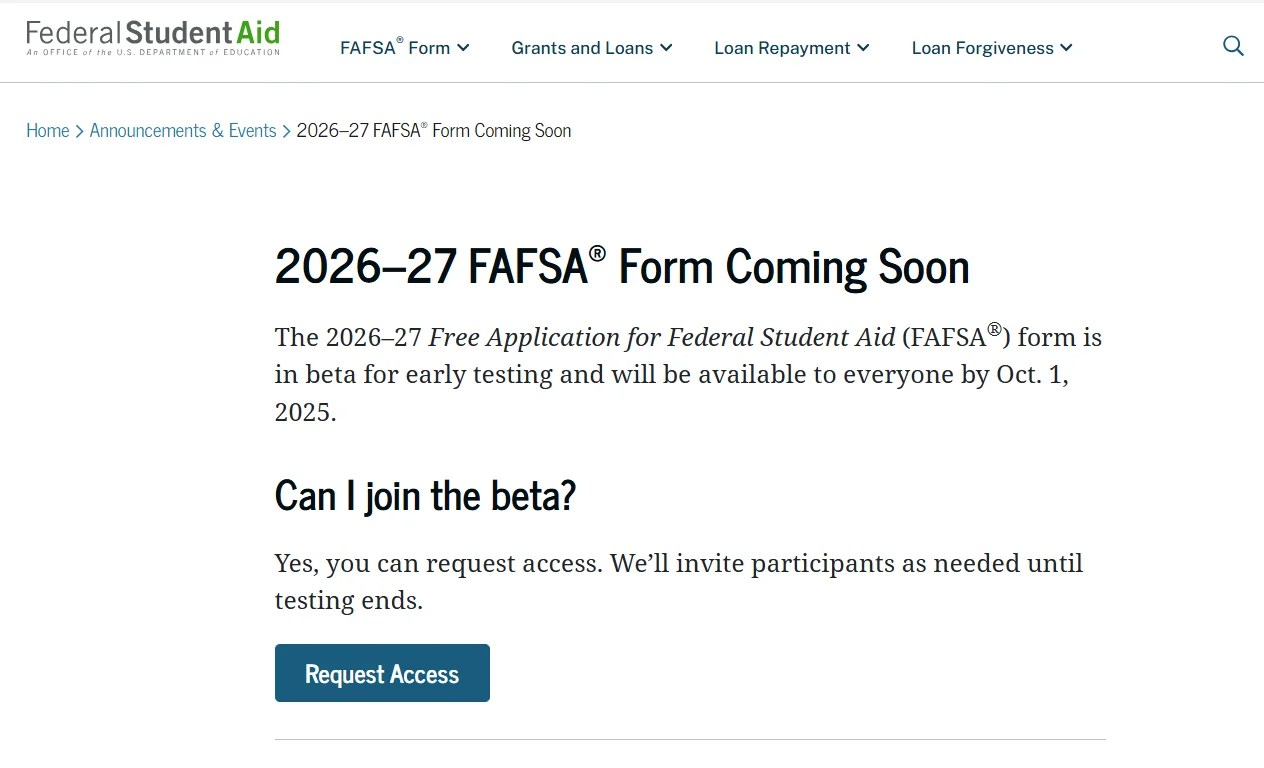
FAFSA 2026-27 BETA TESTING

FAFSA 2026-27 BETA TESTING

As reported earlier, the Department of Education (ED) was conducting FAFSA 2026-27 beta testing with a selected pool of participants. This is somewhat similar to what happened for the 2025-26 application cycle following the collapse of the system during the 2024-25 launch.

During the last FAFSA application cycle the schedule of testing phases were listed along with the type of participants. With the official launch date two weeks away, details from ED about the number of participants and the preliminary results are far less detailed than the previous cycle.

How This Year Differs

Rather than a multiple phases with an incremental increase in size each time, it appears there’s been one72% of institutions report increase in response times for applications. primary testing group of unknown participants. This initial phase is closed.

Information reported by the National Association of Financial Aid Administrators is not encouraging but also not as alarming as the reports from two years ago.

The second phase is open an continues until the end of September. Little information has been found to explain how this second phase will work. 

Would You Like to Be a Beta Tester?

Any student can apply to be a beta tester by submitting a request of the Federal Student Aid (FSA) website. Not everyone who applies will be accepted. Details about the selection process are difficult to find.

Students who are granted early access will not need to take further action on October 1, unless there is an issue with the submission.

Read More